
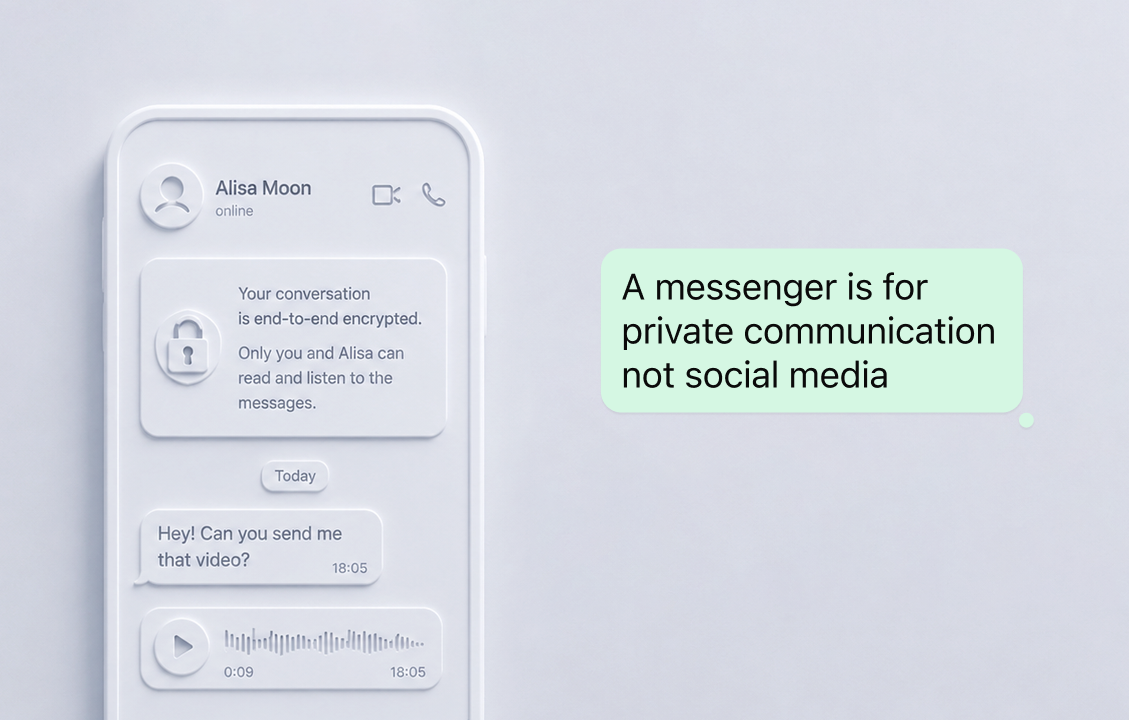
Messaging apps were originally built for one simple purpose: helping people communicate directly. You opened the app, chose a contact, sent a message, made a call, or shared a photo. The experience was private, simple, and focused on the people you actually wanted to talk to.
But over time, many messaging apps have started to look and feel less like private communication tools and more like social media platforms.
Features such as stories, public channels, discovery tabs, ads, business promotions, reels, broadcast groups, suggested content, public profiles, and algorithm-driven recommendations are becoming more common inside apps that were once mainly used for personal conversations. For some users, these features may feel useful or entertaining. But they also change the nature of messaging. A messenger is no longer just a place to talk. In many cases, it has become another platform competing for attention, another social media platform.
Messaging used to be private by default
The original value of messaging was directness. You sent something to a specific person or group, and the communication stayed within that space. It was not designed to be public, searchable, recommended, or mixed with endless content. That made messaging feel different from social media. Social platforms were built around visibility. Messaging apps were built around trust.
This difference matters because people use messaging apps for some of their most personal communication. They talk to family, friends, classmates, coworkers, partners, doctors, service providers, and new contacts. They share daily updates, private photos, documents, locations, emotions, plans, and sensitive thoughts.
When a messaging app begins adding social media-style features, it can blur the line between private conversation and public exposure. The app may still offer private chats, but the environment around those chats becomes louder, more public, and not safe.
Why messaging apps are adding social features
There are several reasons messaging apps are becoming more like social platforms.
First, social features increase engagement. Stories, feeds, public channels, and recommended content give users more reasons to open the app throughout the day. A simple messenger may only be used when someone needs to communicate. A social-style messenger can keep people scrolling, watching, reacting, and getting lost in it.
Second, social features create more space for monetization. Ads, promoted content, business accounts, public channels, and creator tools can turn a messaging app into a larger digital ecosystem. The more time users spend inside the app, the more valuable the platform becomes.
Third, apps want to become all-in-one platforms. Instead of being only for private messages, they try to combine communication, entertainment, shopping, payments, public communities, and content discovery. This may be convenient, but it also makes the app more complex and less private by design.
The problem is not that every social feature is automatically bad. The problem is that private communication and social engagement have different goals. When they are mixed too much, users may lose the quiet, controlled experience that made messaging useful in the first place.
Social features can increase exposure
One of the main privacy concerns is exposure. A simple messenger limits interaction to people you choose. A social-style messenger may make users more discoverable through public profiles, channels, groups, suggestions, or shared content. This can make it easier for strangers, marketers, scammers, or unwanted contacts to reach users.
Even features that seem harmless can change privacy expectations. A story feature encourages people to post updates to a wider audience. Public channels create spaces where users may interact with unknown people. Discovery tools can make profiles easier to find. Ads and recommendations may depend on behavior signals, interests, or activity patterns.
Messaging becomes less about direct communication and more about visibility. For users who want privacy, this shift can feel unsafe. They may open a messenger expecting a private conversation, but instead find public content, suggested groups, promotional messages, or features designed to make them share more.
Attention-driven design changes the user experience
Another issue is attention. Messaging apps are supposed to help people communicate efficiently. Social media apps are designed to keep people engaged and locked in the app. When messaging apps adopt social features, they often bring attention-driven design with them.
This can include notification-heavy experiences, suggested content, unread badges, public updates, promotional tabs, and endless content sections. Instead of opening the app for one conversation, users may be pulled into several distractions.
This matters because communication should not always feel like entertainment. Sometimes people want to send a message, make a call, share a file, and leave. A messenger that constantly adds more layers can make simple communication feel crowded. The more a messaging app behaves like social media, the more it competes for attention rather than simply supporting connection.
Private conversations need a quieter space
Not every digital space needs to be public or content-driven. Some spaces should remain quiet. Private conversations are different from posts, stories, comments, or public updates. They are often more personal, more emotional, and more sensitive. People may share things in a message that they would never post publicly.
That is why the design of a messaging app matters. If an app is filled with feeds, ads, reels, stories, and discovery features, the private chat experience may still exist, but it no longer feels like the main focus.
A private messenger should make users feel in control. It should help them decide who can reach them, what they share, and how visible they are. It should not constantly encourage public posting, profile discovery, or attention-based engagement. The best messaging experience is often the simplest one: open the app, talk to the person you want, and stay in control of the conversation.
Social-style messaging can blur boundaries
Messaging apps are also used across many different parts of life. The same app may include family chats, work groups, school updates, service providers, new acquaintances, and community conversations.
When social features are added, those boundaries can become even more blurred. A person who joined for private communication may suddenly be exposed to public groups, promotional content, or explicit content. A phone number or profile connected to private contacts may also become part of a wider social ecosystem.
This is especially important for people who want to keep parts of their life separate. They may not want temporary contacts, public group members, or unknown users to have easy access to their profile, activity, or personal number. They may not want private communication mixed with social visibility. A messaging app should help users create boundaries, not weaken them.
A more private direction for messaging
The future of messaging does not have to become more crowded. There is still value in communication tools that are simple, direct, and privacy-focused.
A good messenger should protect the purpose of messaging: helping people talk, call, and share without unnecessary noise. It should not turn every user into a public profile or every conversation into part of a larger engagement system.
Zangi follows this simpler direction by focusing on private messaging and calling instead of social media-style features. It does not center the experience around feeds, stories, reels, or public distractions. For users who want communication to stay direct and private, that kind of design offers a clearer alternative to apps that are becoming too social.
The bottom line
Messaging apps became popular because they made communication easy. But as more of them add social media-style features, users should ask whether convenience is turning into exposure.
Private communication should not need public feeds, endless recommendations, or attention-driven design. It should give people control over who can reach them, what they share, and how much of themselves they expose.
Sometimes the best messenger is not the one with the most features. It is the one that lets you communicate without turning your private life into another social platform.