
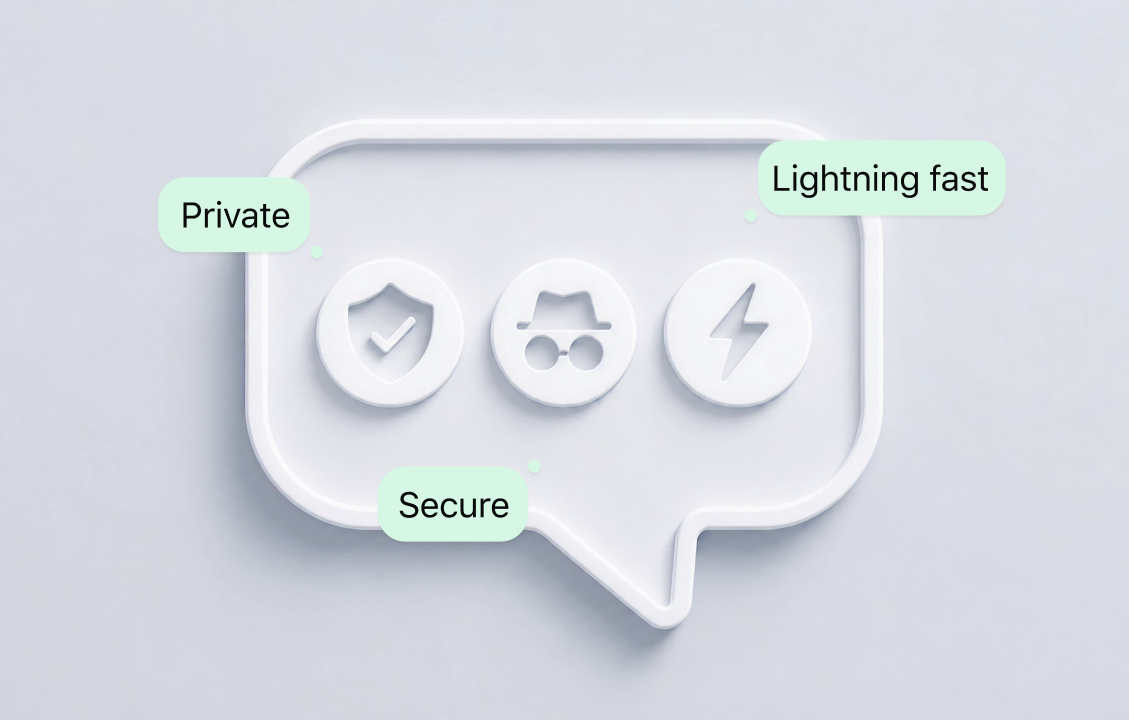
Most messaging apps describe themselves as private, secure, or encrypted. These words sound reassuring, but they do not always tell the full story. Real privacy is not based on one feature or one promise. It depends on how the entire app is designed, from the moment a user signs up to the way messages, calls, files, and personal information are handled.
A truly private messenger should do more than protect the content of your conversations. It should also protect your identity, limit unnecessary data collection, avoid storing private communication when it does not need to, and help users stay in control of who can reach them. In other words, privacy should not begin after you send your first message. It should begin before you even create an account.
Privacy starts with what the app asks from you
One of the first signs of a private messenger is how much information it requires during sign-up. Many apps ask for a personal phone number, email address, contact access, profile details, or other information before users can even start communicating. This may feel normal, but it creates exposure from the beginning.
Your phone number is not just a contact detail. It is often connected to your bank accounts, social media profiles, work contacts, family, delivery apps, subscriptions, and two-factor authentication. Once you use it as your messaging identity, it can become easier for others to connect your conversations to your real-world identity. A more private messenger should reduce this exposure. It should give users a way to communicate without making their personal phone number the center of their account.
Less collected data means better privacy
One of the strongest privacy principles is data minimization. The idea is simple: the less personal data a platform collects, the less there is to expose, misuse, or lose later. Many apps collect more information than users realize. They may ask for contact lists, profile details, device information, cloud backups, or other data that is not always necessary for private communication. Even if this data is collected for convenience, it still increases the amount of personal information connected to the user.
A private messenger should only ask for what is needed. It should avoid unnecessary personal data collection and reduce exposure wherever possible.
Before choosing a messenger, users should ask:
- Does it require my real phone number?
- Does it ask for my email address?
- Does it need access to my contacts?
- Does it store my messages or files in the cloud?
- Does it include public discovery or social features?
- Does it collect more information than it needs?
These questions matter because privacy is not only about protecting messages. It is about reducing how much personal information is connected to the app in the first place.
Cloud storage is convenient, but it has privacy trade-offs
Cloud storage can make messaging more convenient. It can help users restore chat history, access files, and move between devices more easily. But it also creates a privacy trade-off. When messages, files, photos, or call-related data are stored in the cloud, that information exists outside the user’s device. Even when platforms apply security measures, stored data creates another place where private communication may remain available.
For some users, this convenience may be useful. For others, especially privacy-conscious users, less storage can mean stronger protection. Private conversations can include personal photos, family updates, documents, addresses, financial details, travel plans, and sensitive emotions. Not every conversation needs to live forever in cloud storage.
Encryption alone is not enough
Encryption is important. It helps protect message content and keeps communication safer from unwanted access. But encryption alone does not make an app fully private. A messenger may encrypt messages but still require a personal phone number. It may protect chat content but store backups. It may secure calls but still encourage contact syncing, public discovery, ads, feeds, stories, or social engagement features.
That is why users should look beyond one privacy claim and ask how the entire app works.
True privacy includes several layers:
- protecting message content
- reducing identity exposure
- limiting stored data
- avoiding unnecessary personal information
- giving users control over who can contact them
- keeping private communication separate from social media-style exposure
A truly private messenger should combine security with thoughtful product design.
Private messaging should not feel like social media
Messaging and social media are different. Social media is built around visibility, public engagement, discovery, and attention. Messaging should be built around direct communication and trust.
Many apps now mix private messaging with public features like feeds, stories, reels, channels, recommendations, ads, or searchable profiles. These features may increase engagement, but they can also increase exposure. A private messenger should not pressure users to become more visible. It should not turn communication into another attention-driven platform.
Users should control who can reach them
Privacy is also about boundaries. When you share your personal phone number, you may become reachable outside the original conversation. Someone can call you, text you, add you to groups, or try to find you on other platforms connected to that number.
This can be uncomfortable in many everyday situations: talking to a new contact, joining a temporary group, buying or selling something online, communicating while traveling, or connecting with someone you do not know well yet. A private messenger should help users communicate without giving others unnecessary long-term access to their personal life.
It is private by design, not just private by marketing
Many apps use words like “private,” “secure,” or “encrypted.” But users should look beyond the words and ask how the app is actually built.
A truly private messenger should reduce exposure at every step:
- before sign-up
- during account creation
- when adding contacts
- while messaging and calling
- when sharing files
- when storing or not storing data
- when deciding whether to include social features
Privacy should not be an extra setting hidden inside the app. It should be part of the product’s design.
The bottom line
A truly private messenger is not defined by one feature. It is defined by the full experience. It should protect your conversations, but it should also protect your identity. It should allow communication without forcing users to share a personal phone number. It should collect less data, avoid unnecessary cloud storage, and keep private messaging separate from public social media features.
Private messaging should feel simple, direct, and controlled by the user. It should help people stay connected without giving away more personal information than necessary. That is what makes a messenger truly private.